
How APS uses 3D modelling to design accurate LEV systems
Mike Cautley, Project Manager | Published October 13th 2026 | Updated October 13th 2026
We’ve been speaking to Mike Cautley, Project Manager at APS, about how the design and installation of dust extraction systems has changed over time, and why we’re turning to technologies like 3D modelling to build accurate installations.
How has the design and installation of dust extraction systems changed since you started in the industry?
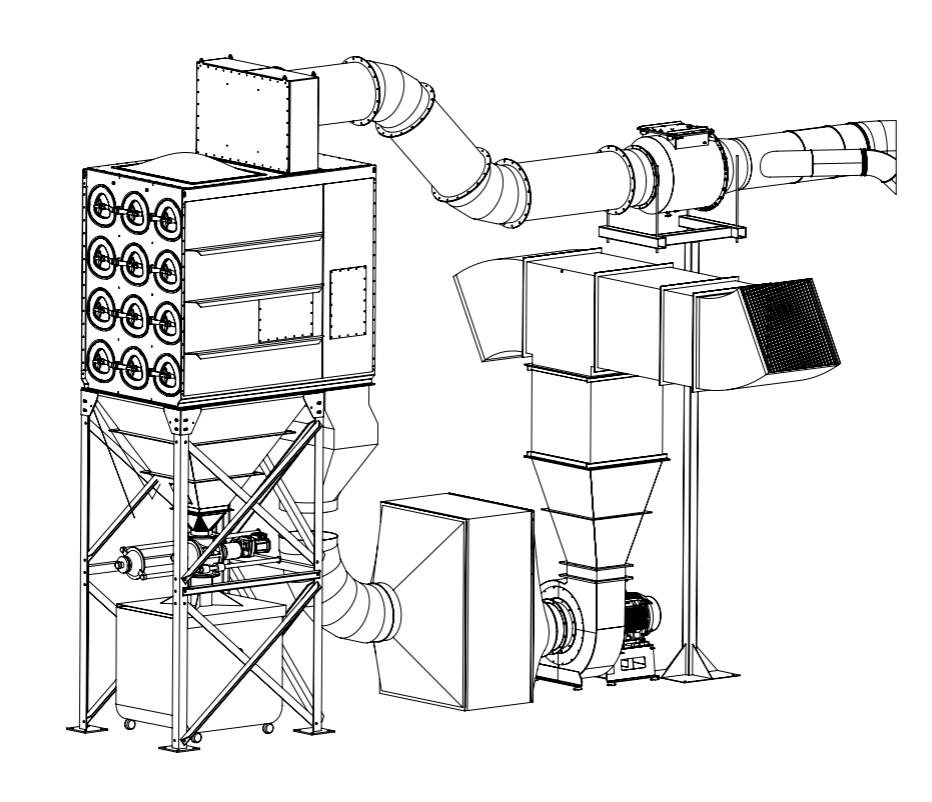
One of the biggest changes has been the move from traditional 2D CAD drawings to 3D design. When I first started, 2D drawings were the norm, but they could sometimes be difficult for customers to interpret and left much more reliance on measurements, photographs and the engineer’s ability to visualise the finished installation.
3D modelling has changed that considerably. We can now build much more detailed models of a system, incorporate equipment supplied by manufacturers and use the design information to support things such as bills of materials and purchasing. More importantly, it gives both our engineers and our customers a much clearer understanding of how the finished system will work within the existing environment.
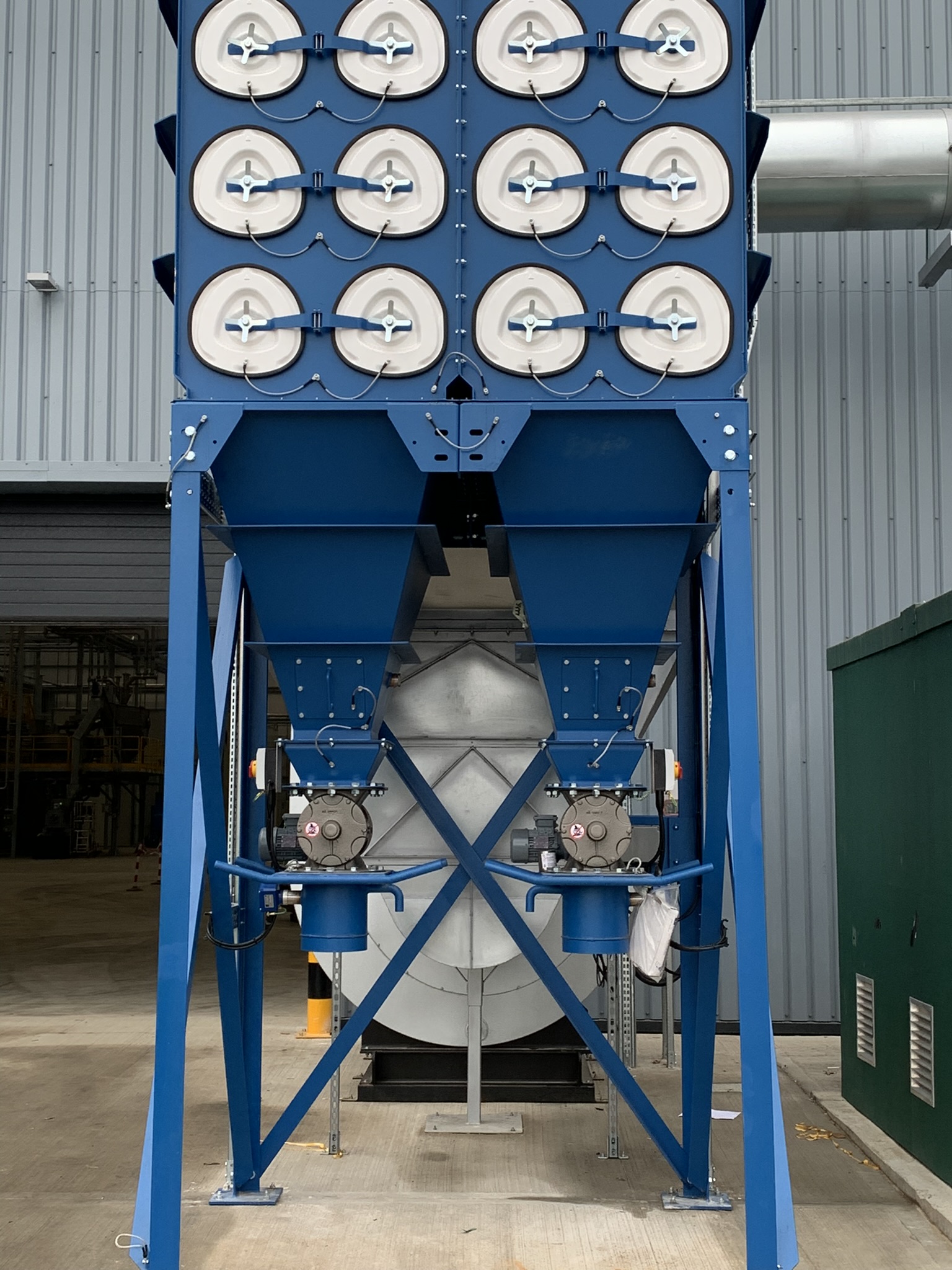
The next significant development is 3D scanning. By creating an accurate digital record of a site, we can bring the existing factory environment into the design process. It means we can check proposed ductwork and equipment against existing structures, services and access requirements without repeatedly returning to site to take additional measurements.
For me, the combination of 3D design and 3D scanning has been one of the biggest advances in how we approach project engineering.
What difference does Front-End Engineering Design (FEED) make when it comes to designing systems?
FEED gives everyone greater clarity before the main project begins.
The customer starts by explaining what they need to achieve, and we use the FEED process to translate that into a detailed engineering specification. Depending on the project, that can include the type of dust collector required, ancillary equipment, ductwork routes, safety and compliance considerations such as ATEX requirements, and the overall system configuration.
The major advantage is that those decisions are discussed, developed and formally agreed at an early stage. By the time this turns into an official order, a substantial amount of the engineering work has already been completed and reviewed.
That creates transparency for everybody involved. The customer understands what’s achievable, what the proposed system will include and where its limitations may be. From our perspective, it reduces unnecessary back-and-forth during delivery and allows the overall project to progress much more smoothly.
How does 3D modelling help with designing systems, and what are the benefits for customers?
The main benefit is that it allows us to design around the real factory environment rather than treating the extraction system in isolation.
When 3D scan data is incorporated into the model, we can position hoods, ductwork and the dust collector (where applicable) within an accurate representation of the customer’s site. We can identify potential clashes with things such as lighting, existing services or other equipment before installation starts. We can also consider practical issues, such as whether the proposed installation would affect an operator walkway or make an area more difficult to use.
For the customer, that makes the design far easier to understand. Rather than looking at an indicative 2D drawing, they can see where the equipment is actually intended to go and understand how it will fit around their existing operations.
For the project team, it reduces the risk of missing important measurements, needing additional site visits or discovering installation problems once work has already started. That ultimately means fewer surprises and a much better coordinated installation.
Is there a case study where 3D modelling played a significant role?
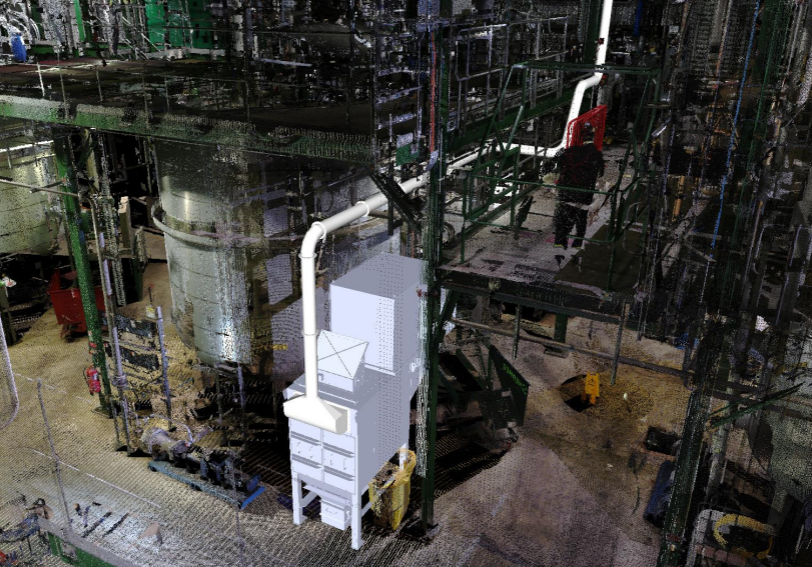
One good example is a major project we worked on for a manufacturer of high-performance polyether ether ketone (PEEK) polymer.
It was a particularly large and technically demanding project, requiring detailed consideration of equipment positioning, ductwork routes and the specification of the dust collector and associated components. The environment also had specific ATEX requirements that needed to be taken into account.
As part of the FEED study, we used 3D scanning and 3D design to develop the layout in considerable detail. The customer required a very high degree of accuracy, so having that information available at the front end of the project was particularly valuable.
It was also a substantial installation. At the FEED stage, we estimated that the work could require around six to eight weeks, with two or potentially three installation teams working continuously. By developing and agreeing the design in advance, a significant proportion of the engineering work had already been completed before the installation phase began.
For a project of that scale, having everybody understand and agree the specification upfront was a major advantage.
What do you see as the next big thing impacting the design of dust extraction systems?
AI has the potential to have a significant impact.
We are still relatively early in understanding exactly how it can be applied within engineering, but we are already seeing ways in which it can reduce the time spent on technically demanding or administrative tasks.
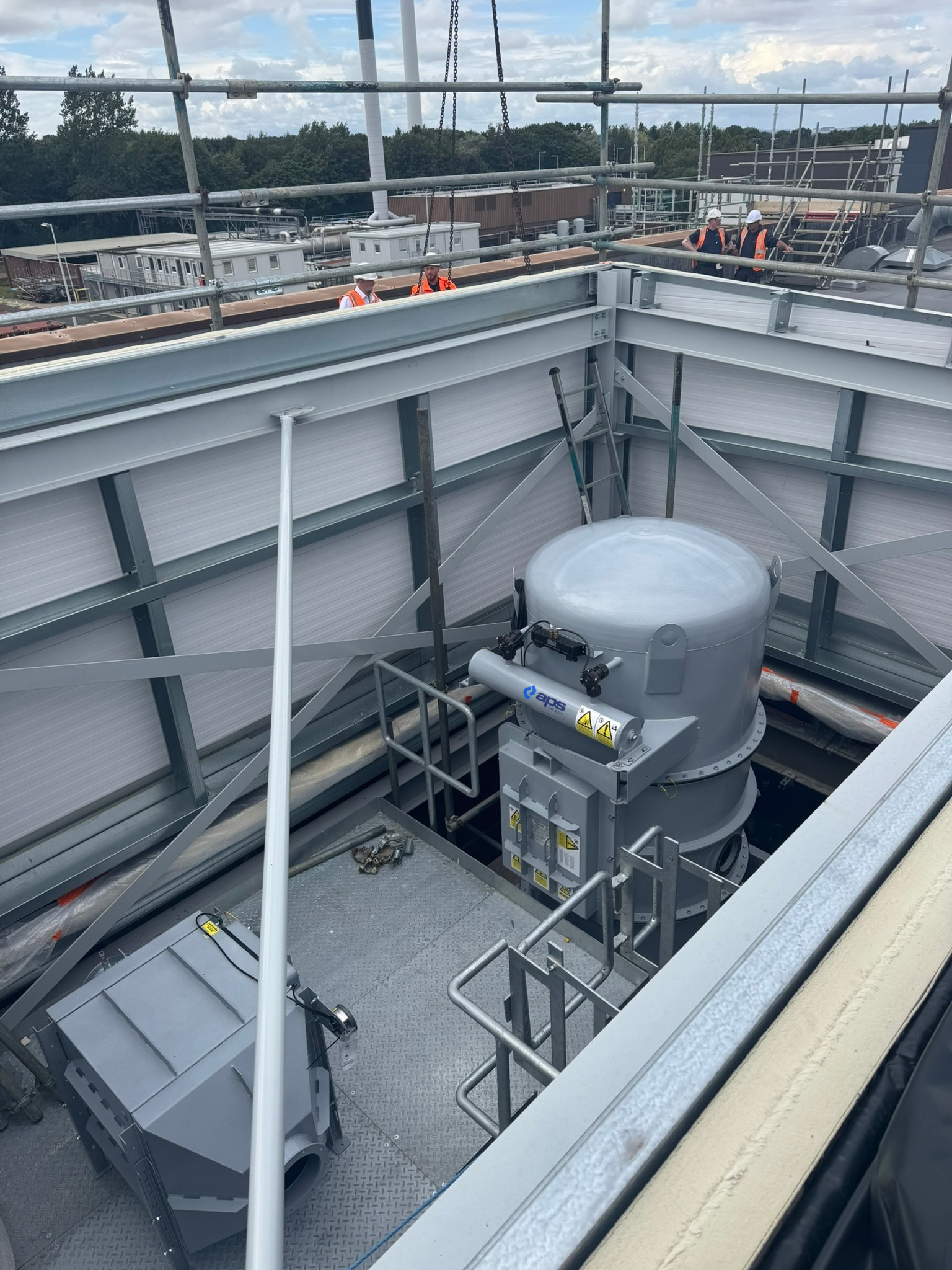
On one project, for example, we used AI on site to help develop supporting calculations and information around the proposed support of an extraction stack. What would traditionally have required considerably more time could be developed very quickly, allowing the project team to respond to the customer while the installation team was still on site.
There is an important qualification, though. AI outputs need to be checked and challenged. We’ve seen examples where very detailed work has been produced but individual calculations have contained errors. Engineering knowledge and validation therefore remain essential, and at APS we take pride in our quality assurance, backed by trained engineers with years’ worth of real-world trouble shooting that AI could never replicate.
We can’t look at AI as a way of replacing engineers, it has to be seen as a helpful tool for making us more efficient, letting us spend more time on the most complicated design bits, like how a system fits around operators in a factory.
We’re already using AI to support activities such as document reviews, where specifications, quotations and technical information need to be compared. Work that could previously take days can potentially be reviewed much more quickly, freeing engineers to concentrate on the areas where their judgement and experience add the greatest value.
Ready to work with a team that’s always leading innovation? Get in touch with us today.

We Consult
Understanding is key. We take the time to grasp your specific requirements, ensuring solutions tailored just for you.
We Design
With your needs as our blueprint, we craft designs that are both functional and in step with modern aesthetics.
We Install
Our team prioritises a smooth, efficient installation process, minimising disruption while focusing on optimal safety outcomes.
