
Case study: Delivering safe, contained dust extraction in a space-restricted pharmaceutical facility
Matt Brown | Published October 16th 2026 | Updated October 16th 2026
At APS, we’ve spent decades serving the pharmaceutical industry. We’ve worked with one of our clients for over 20 years, supporting them with Front-End Engineering Design (FEED) studies, and the improvement and replacement of legacy LEV systems.
Lots of this work has centred around bringing the site’s systems in line with the latest regulations including complying with ATEX requirements and upgrading to full bag in/bag out (BIBO) systems for safe, fully contained filter changes.
In our latest project with the firm, we installed a new high vacuum dust extraction system for handling potent pharmaceutical active ingredients.
Challenge
The biggest challenge was navigating the minimal space we had to work with. The site has over 50 Local Exhaust Ventilation (LEV) systems, and most are located in plant rooms directly above manufacturing areas.
These plant rooms have limited headspace and a maze of walkways, and are also crammed with heating, ventilation, and air conditioning (HVAC) systems, heat exchangers, control panels, vacuum pumps and other equipment, as well as extensive ductwork, pipework and cabling.
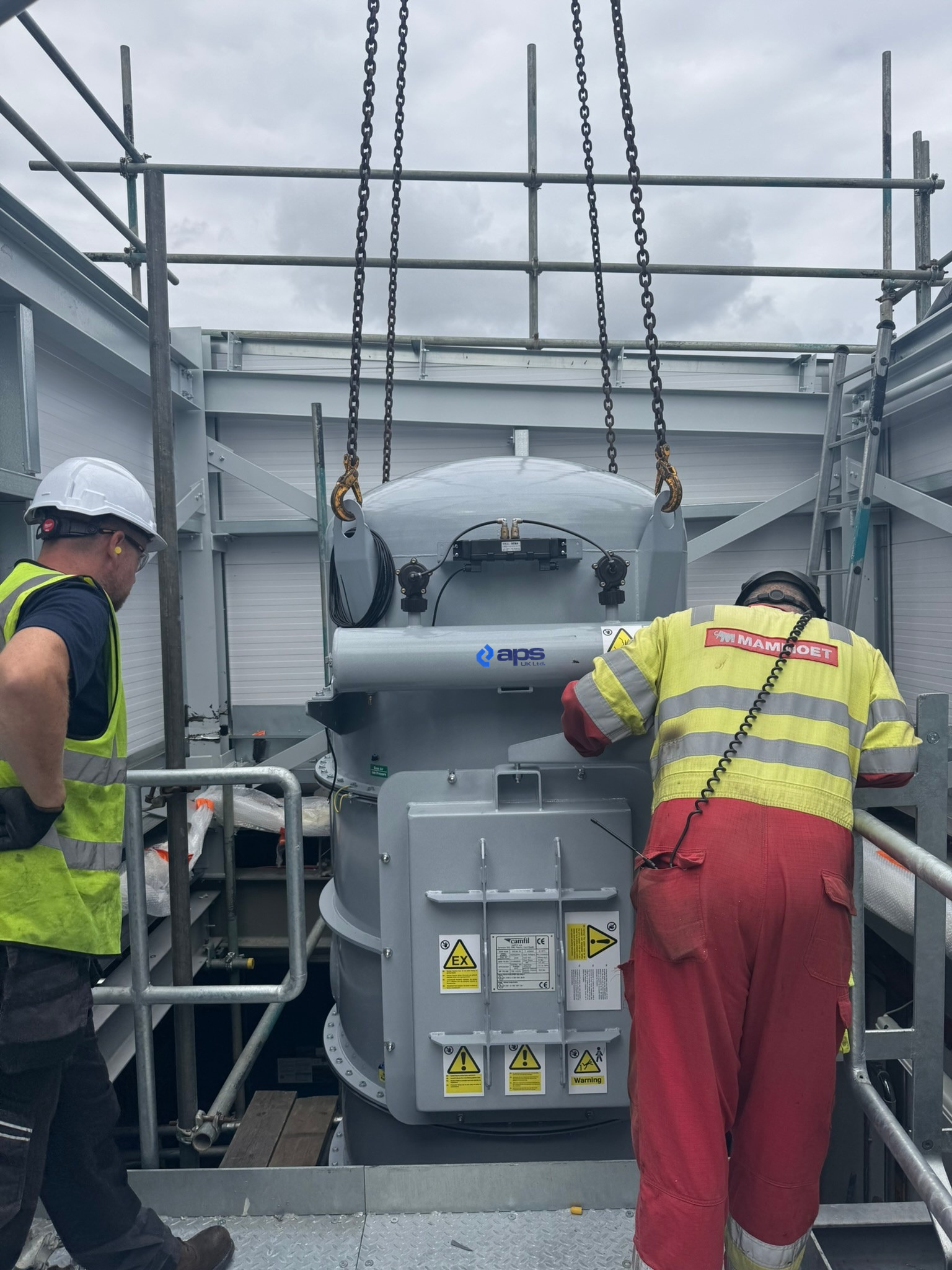
When a new or replacement piece of equipment is needed, one of the main challenges is finding a suitable location for the equipment to be installed, getting it into that location is the next the challenge. Often the only option is through the roof, which makes planning paramount to ensuring safety. Our equipment is often part-built before its lifted into place, and weather adds further constraints too.
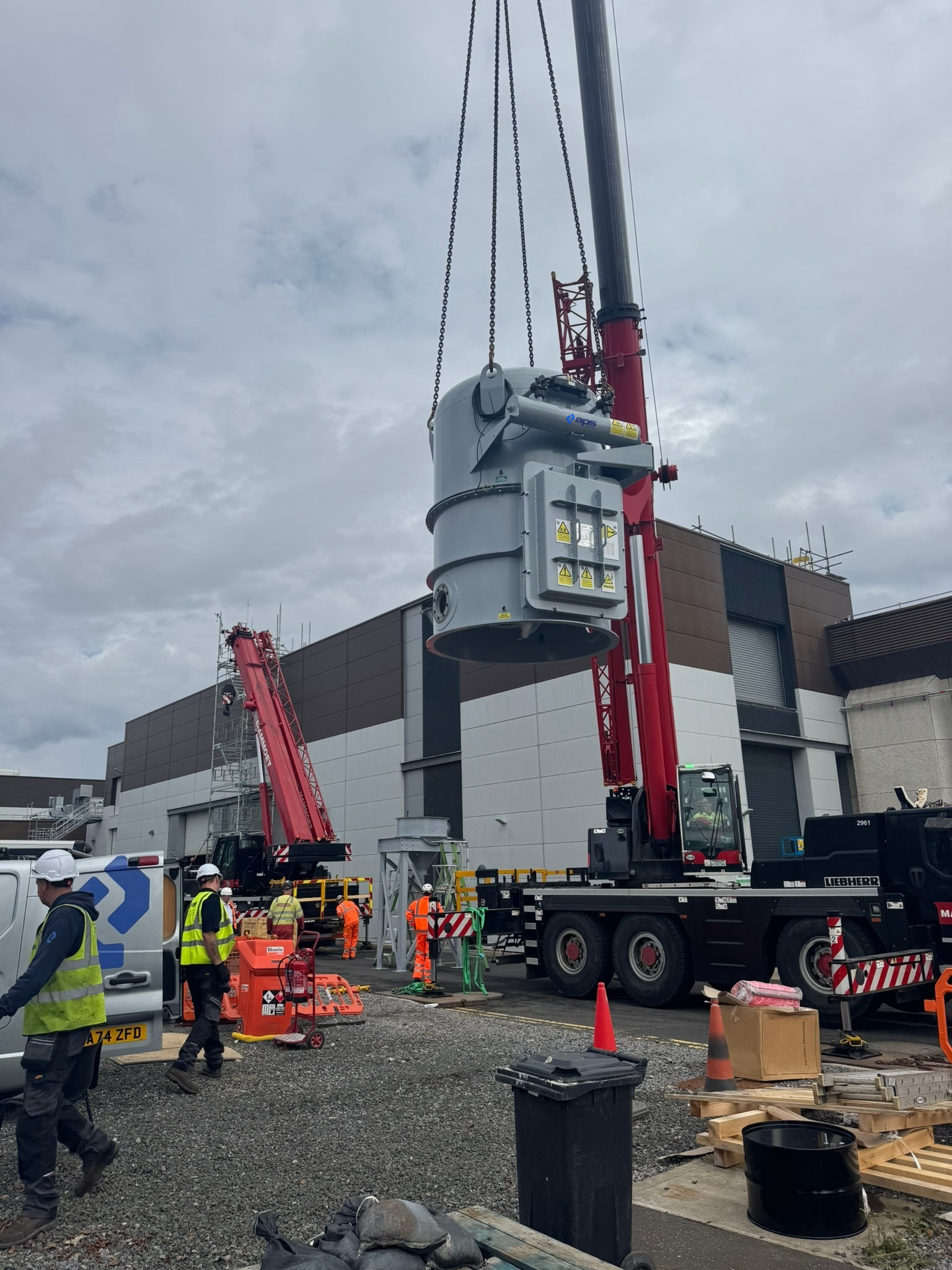
Solution provided by APS
As with any pharmaceutical project, we worked with the customer and their engineering support team on the design and specification of the equipment, as well as how it could be safely installed in its location.
Our design process involves 3D modelling, which lets us build and virtually install systems within our customer’s sites, so we can see every potential constraint well before we reach the physical installation stage. In this project, it meant we could identify clashes with existing equipment, and design with greater accuracy, cutting the cost of redraws or rebuilds later down the line.
The system we provided is a high vacuum (HV) dust extraction system for handling potent pharmaceutical dust, the system includes:
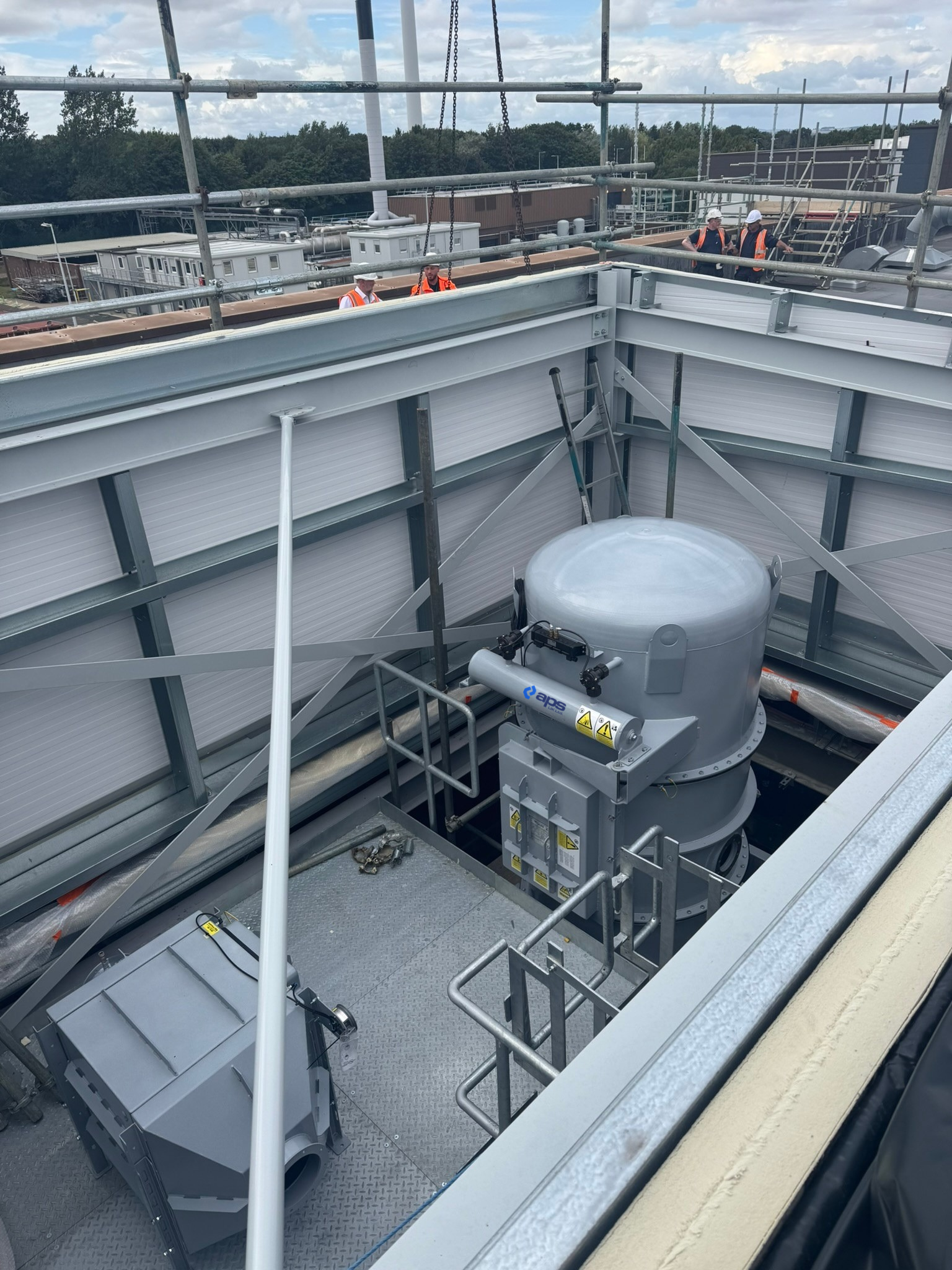
The system takes dust from multiple LEV systems around the plant room. Dust from each one drops into a hopper, then passes through an ATEX-rated transfer system, where it’s conveyed via high vacuum pipework to the central HV dust collector.
Benefits and outcomes
Because the central HV dust collector serves multiple LEV systems, it removes the need for individual, time-consuming waste dust collection. This reduces man hours, the risk of secondary exposure, and the risk of collection bins being overfilled.
Alex McGolpin, Area Sales Manager at APS said: “In such a quality & safety-driven industry, LEVs and dust collection systems are important for making sure pharmaceutical products are manufactured safely, without harming operators via dust inhalation or the risking cross contamination. Our years of experience in this sector means we can deliver solutions confidently, using advanced techniques like 3D modelling to make sure systems fit seamlessly into sites without disrupting work.”
Are you ready to upgrade your dust extraction system? Get in touch with our expert team today.

We Consult
Understanding is key. We take the time to grasp your specific requirements, ensuring solutions tailored just for you.
We Design
With your needs as our blueprint, we craft designs that are both functional and in step with modern aesthetics.

We Install
Our team prioritises a smooth, efficient installation process, minimising disruption while focusing on optimal safety outcomes.