
A guide to dust and fume extraction in the food industry
Katie Burrell, Project Engineer | Published June 12th 2026 | Updated June 12th 2026
With the Health and Safety Executive (HSE) recently announcing a series of inspections across large bakeries, the need for high-quality Local Exhaust Ventilation (LEV) systems in food production environments is again in the spotlight. In our latest blog, Project Engineer Katie Burrell talks through the dangers of food dust, and the importance of dust control.
The dangers of dust in food processing
The food manufacturing industry can throw out lots of risks when it comes to ensuring staff safety. One issue, which affects large bakeries in particular, is food dust.
Ingredients like flour, flavourings and sugar all generate dust during processing, which can be harmful, posing significant health risks when airborne. Workers exposed to dust for even a short amount of time can face skin irritations and respiratory problems in the immediacy, and regular exposure can lead to long-term health conditions like occupational asthma or lung cancer.
Whether you’re a bakery manager, production supervisor, or business owner, you’re required to be aware of these health risks, alongside other serious hazards like combustion, which can have a devastating effect on your factory.
The HSE announced recently that it would be carrying out a series of inspections at large bakeries across Great Britain, checking that employers are properly protecting workers from the dangers of dusty ingredients including flour dust.
If you operate a food processing facility, it’s your duty as an employer to follow the hierarchy of controls listed under the Control of Substances Hazardous to Health (COSHH) regulations. In the coming weeks and months, inspectors will be assessing whether you’re correctly managing risk in your factory – including whether you have appropriate engineering controls like Local Exhaust Ventilation (LEV) systems in place.
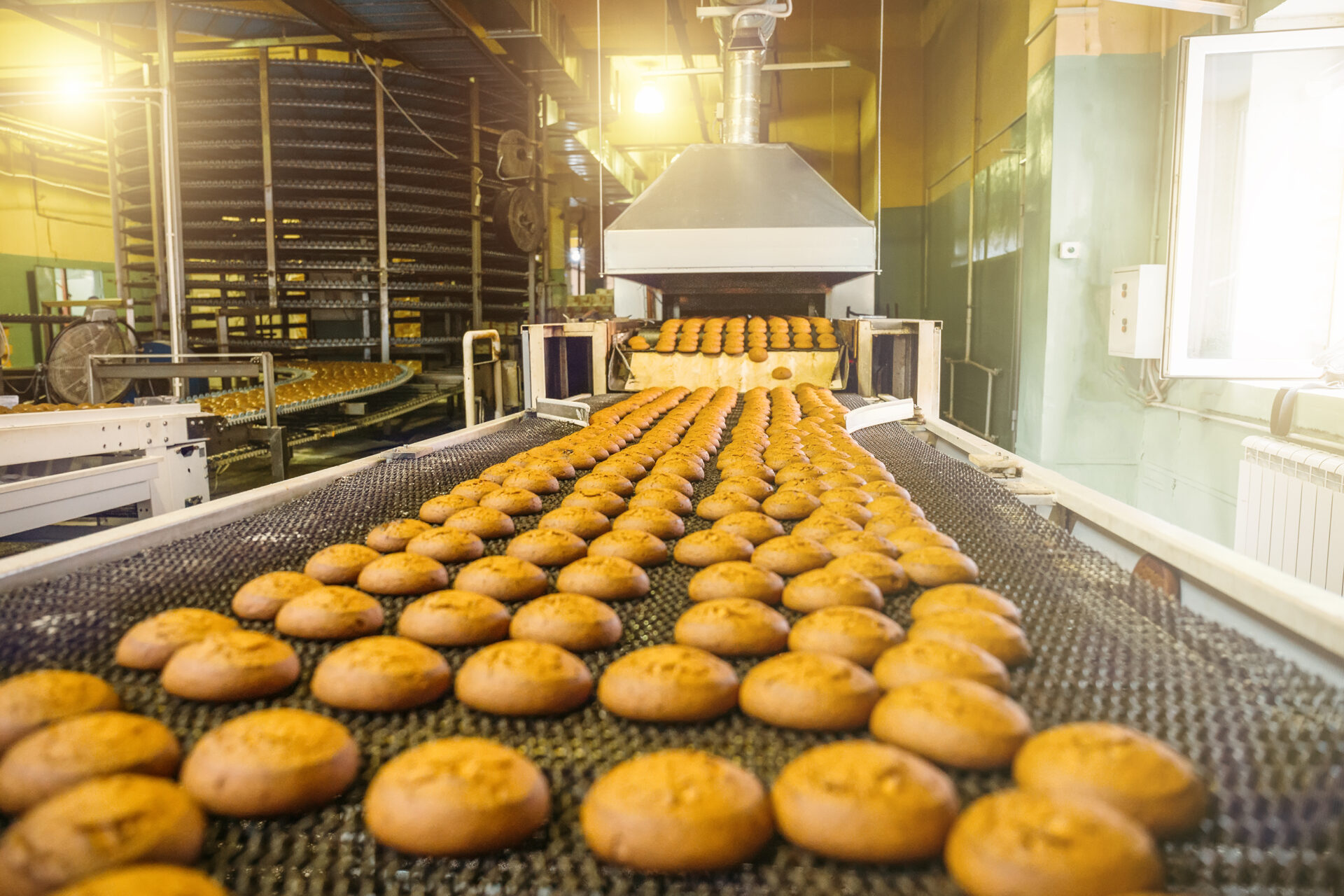
Managing dust in food manufacturing
Effective dust control in food processing doesn’t have to be difficult. A combination of LEV systems, strict cleaning regimes, and regular safety training is paramount to keeping your team safe across the production line.
An LEV system captures airborne contaminants like flour at the source before they can be inhaled or settle onto equipment and other surfaces. By extracting dust directly from mixers, conveyors and packaging stations, dust extractors improve overall air quality and lower the risk of cross contamination.
But an LEV system installation alone doesn’t mean you’ve solved the issue of dust management. If you want to ensure your team is protected over time, regular inspection and maintenance of ducting, filters and fans is essential for consistent airflow and reliable performance over time. LEV testing should legally take place every 14 months, while servicing should generally take place once a year, or more in high-usage environments.
Good housekeeping protocols are important too, with regular cleaning reducing any potential accumulation of dust on surfaces, and minimising cross contamination. By training your team on the health risks associated with inhalable dust, and the potential fire and explosion hazards linked to combustible powders, you can further reduce risks to both personnel and property, keeping your factory operating at its best.
By combining effective extraction, regular cleaning and maintenance and up-to-date staff training, you can create a safer, compliant and more efficient production environment, helping you stay competitive.
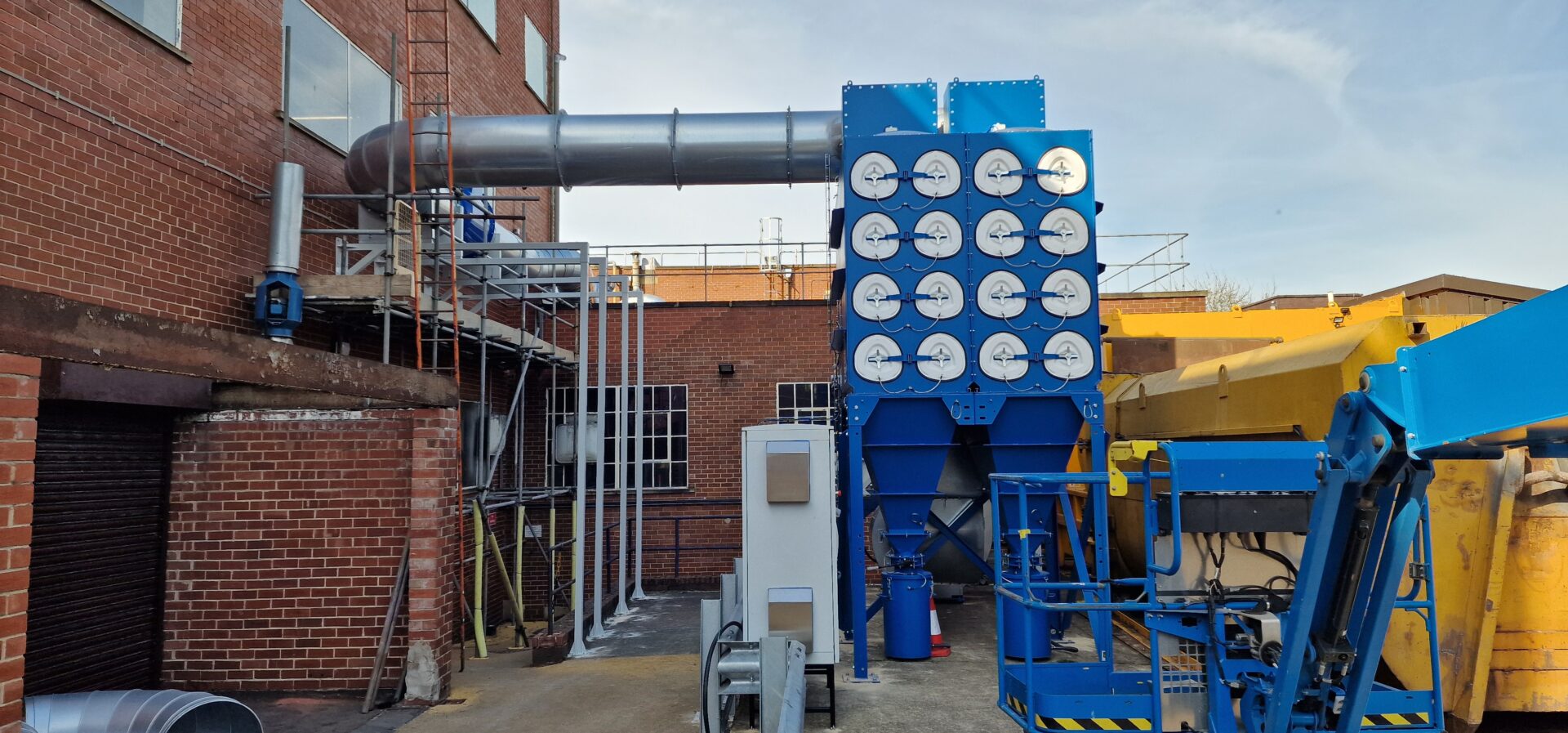
Selecting the best dust extraction system for a food processing environment
LEV systems aren’t a one-size-fits-all fix, and any dust extraction partner that tells you otherwise likely won’t provide you with the safest, most compliant and efficient solution.
A bespoke LEV system design is tailored exactly to your needs and processes, giving you a solution that matches the dusts generated, the processes used, and the layout constraints unique to your factory. Off-the-shelf systems may suffer from inadequate capture, lacking the specialised design required to effectively suppress dust, and lack flexibility, potentially interrupting the flow of your workspace.
In a bakery or food processing environment, dust extractors should be designed for easy cleaning, and should also be ATEX-certified, which means they’re built to safely remove, filter, and contain combustible dusts, preventing explosions.
At APS, we offer a Front-End Engineering Design (FEED) service, which is where we scope, plan, and start the design work of a dust extraction project, outline technical requirements and assess potential risks and costs.
This gives our customers a detailed framework for decision-making, determining a project’s feasibility and giving an accurate cost estimate before a full investment is made. A comprehensive process, it ensures you avoid guesswork, taking in all available information from the start, and involving continued collaboration throughout to meet all requirements.
In short, it helps you make sure you’re choosing the right system.
Ready to pass your next HSE inspection with flying colours?
Speak to our expert engineers today about how we can help you keep your staff safe through effective dust control.
Food dust extraction FAQs
A: Food manufacturing generates various dusts, including flour, sugar, flavourings, spices, and powders.
A: Inhaling flour dust can cause various respiratory problems. Flour dust is also combustible, and presents a serious fire and explosion hazard.
A: You should regularly maintain the cleanliness of your factory, and also ensure a high-quality Local Exhaust Ventilation (LEV) system is installed to capture and remove dust at source.
A: UK manufacturers are subject to Control of Substances Hazardous to Health (COSHH) and Dangerous Substances and Explosive Atmospheres (DSEAR). COSHH mandates that employers must take proactive steps to protect employees from hazardous substances in the workplace, while DSEAR covers the control of risks to safety from fire and explosions caused by dangerous substances.

We Consult
Understanding is key. We take the time to grasp your specific requirements, ensuring solutions tailored just for you.

We Design
With your needs as our blueprint, we craft designs that are both functional and in step with modern aesthetics.

We Install
Our team prioritises a smooth, efficient installation process, minimising disruption while focusing on optimal safety outcomes.