
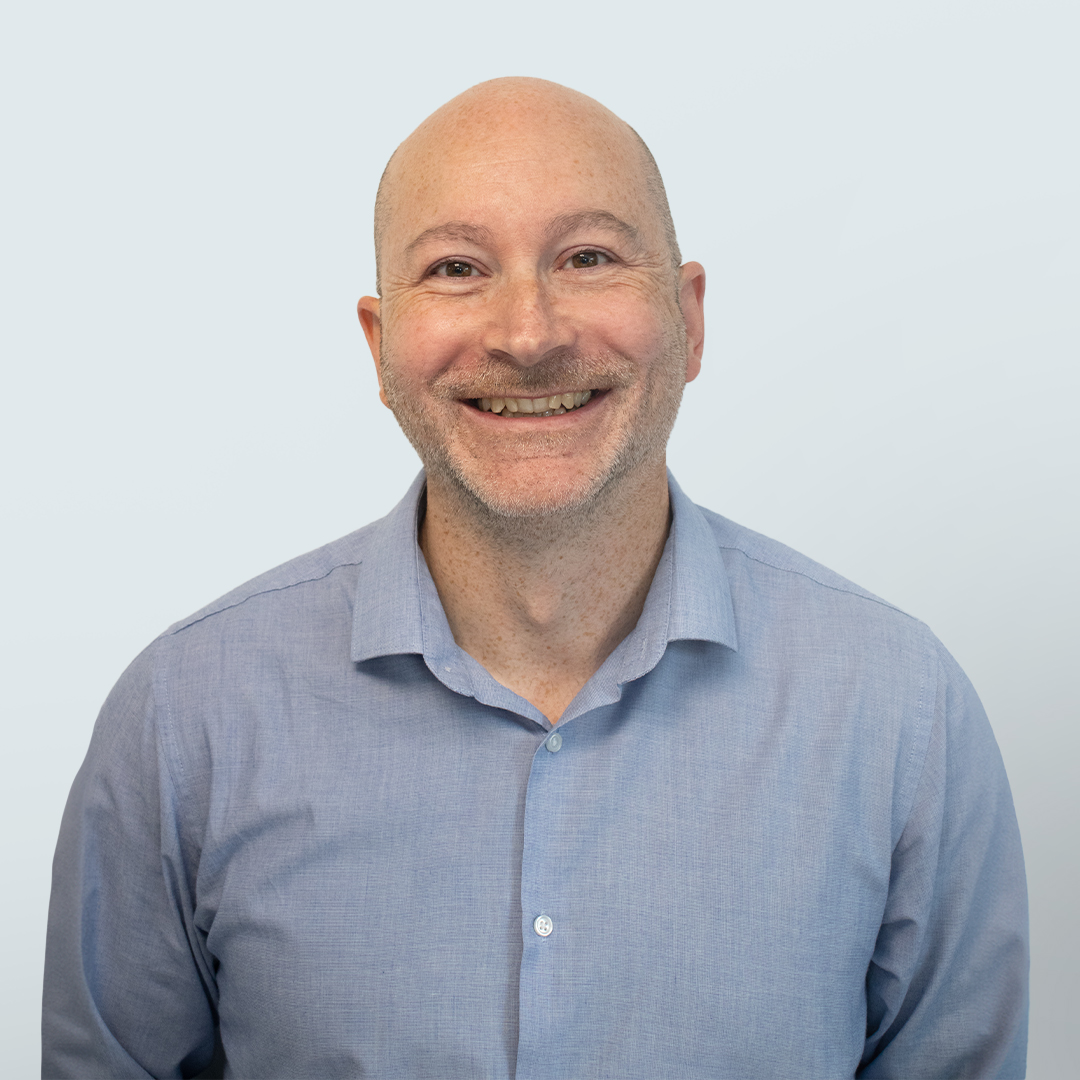
Meet Mike Cautley, Project Manager overseeing bespoke dust extraction installations
Mike Cautley | Published May 12th 2026 | Updated May 12th 2026
In the newest part of our meet the team series, we’re talking to Mike Cautley, our Project Manager, about his dust and fume industry experience, the software we’re using at APS, and how the project team maintains good communication throughout design and installation.
What is your job role at APS, and what are your main responsibilities?
I’m the Project Manager at APS, looking after the projects team, including our two installation teams. I lead the team on our dust and fume extraction projects across the UK, working with customers in sectors ranging from pharmaceuticals to food and beverage, making sure the bespoke systems we design and install meet their needs and expectations.
What experience do you have working within dust extraction?
I’ve worked in the filtration/extraction industry for 16 years now, spending 11 years at Camfil as a Project Engineer and then Project Manager. Working at Camfil put me in contact with the team at APS, and we worked very closely together, often as the customer but occasionally as the supplier. Having worked at Camfil for many years, specifically the molecular filtration side of the business, I was exposed to a number of large projects.
After Camfil, I worked at a couple of companies. One was Krones, as Project Manager assisting with the implementation of some very big contracts for the beverage industry, including Coca Cola and Grants Whisky.
I then moved to BMP as Project Engineer, where a brand-new product, a biodegradable tree shelter called ‘Tree Hugger’, was in development. I designed the machine used to produce these by the millions, which was an interesting and slightly off the beaten track project.
I also have multiple qualifications, including a BSc in Product Design and Engineering from the University of Lancashire, and a module in Structural Integrity and Engineering Mechanics from Open University.
I’m also a member of the Institution of Engineering and Technology (MIET), and I’m about to undertake the P602 qualification, which covers the design principles of LEV Systems.
What technology and software are you using at APS during the design and installation phases, and what are the benefits of it?
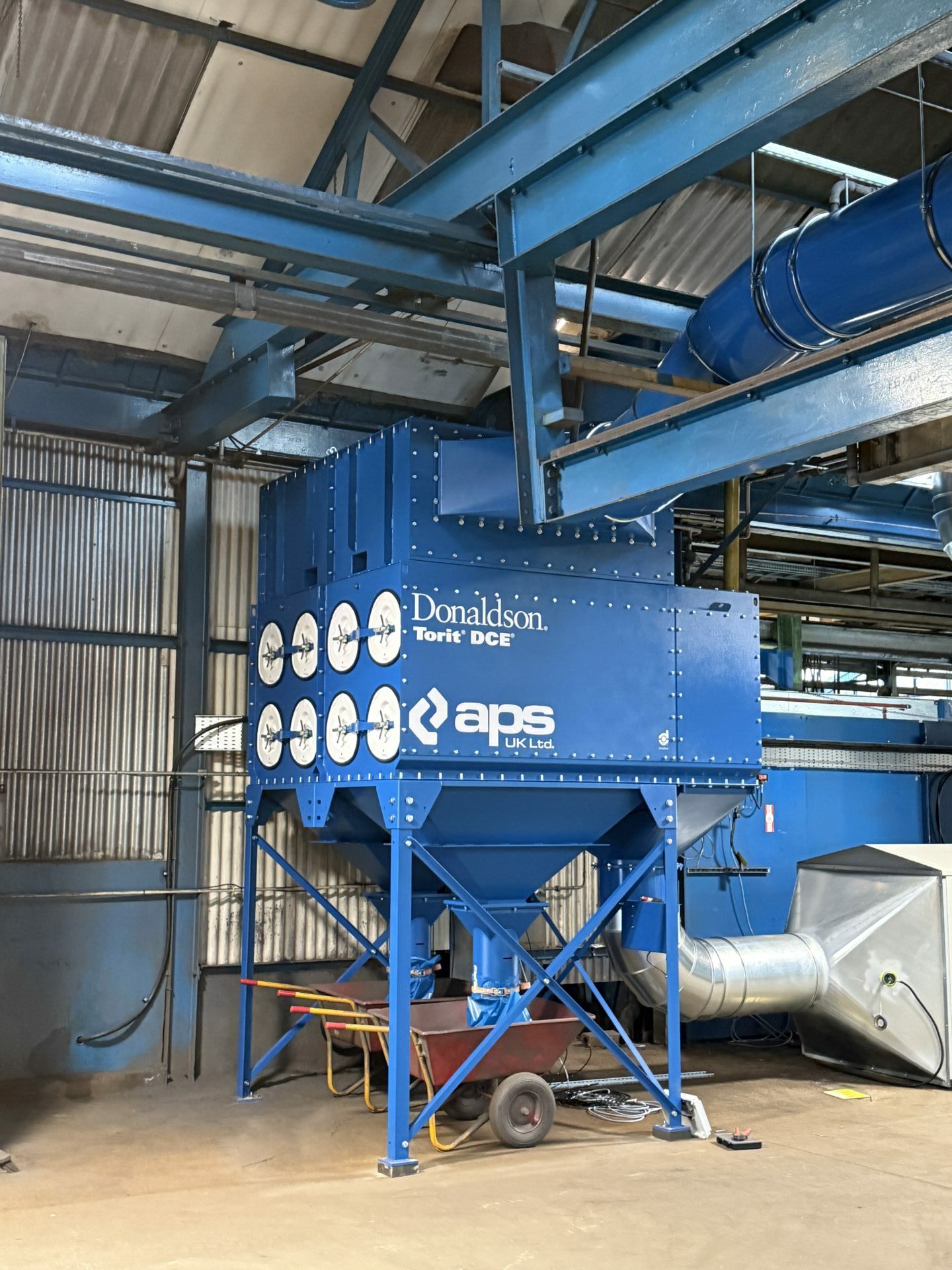
We utilise two main pieces of software, Inventor and Solidworks. We also have use of more traditional AutoCad 2D CAD software, but we prefer 3D software as this gives us a number of benefits above standard 2D.
Using 3D software, we have the ability to fully model an LEV system and incorporate elements of the client’s machinery or building into the model. This allows us to be able to easily communicate the LEV system to the client, who may not be ‘drawing savvy’, helping them instantly understand the system and the proposed ducting route and locations of the equipment.
From an installation perspective, this allows us to be able to easily generate a full Bill of Materials (BOM), which helps the Project Engineer to order the correct amount of ducting, transitions, fabricated items and other components. The installation team can then easily see a drawing in 3D and understand the LEV system, whereas using a 2D drawing can take time to understand.
Recently, we have undertaken a number of projects where we’ve taken a scan of the client premises. This scan allows us to have a fully 3D rendered image, so we can take accurate measurements. It can then be imported into the 3D software, where we can generate the LEV system in the 3D space. This allows us to ‘see’ any potential clashes and ultimately assists the overall installation process. It’s also very useful when presenting to customers, as they can see their factory, complete with the new proposed LEV system.
How does the project team ensure good communication during the design phase?
We have a defined process flow, that allows the whole projects team to be able to ‘run’ with the project. This includes a number of ‘hold’ points. One of these important hold points, is the initial site visit, which we use as a method of capturing the clients’ requirements accurately, post contract.
This is recorded and used to generate a general arrangement drawing, which in conjunction with the comments above, will be sent to the client to allow them to review the proposal. This gives the client an opportunity to ensure that we have fully captured their requirements, which they can then sign off on.
After this, we often produce a timing plan and review this with the client to ensure that they understand when things will be done, and also ensure that the client understand what we require from them.
What’s your proudest career and personal achievement to date?
Hmmm. Quite difficult to say. I think gaining membership of the MIET, was something that I had wanted to do for some time, and I finally got that a few years back.
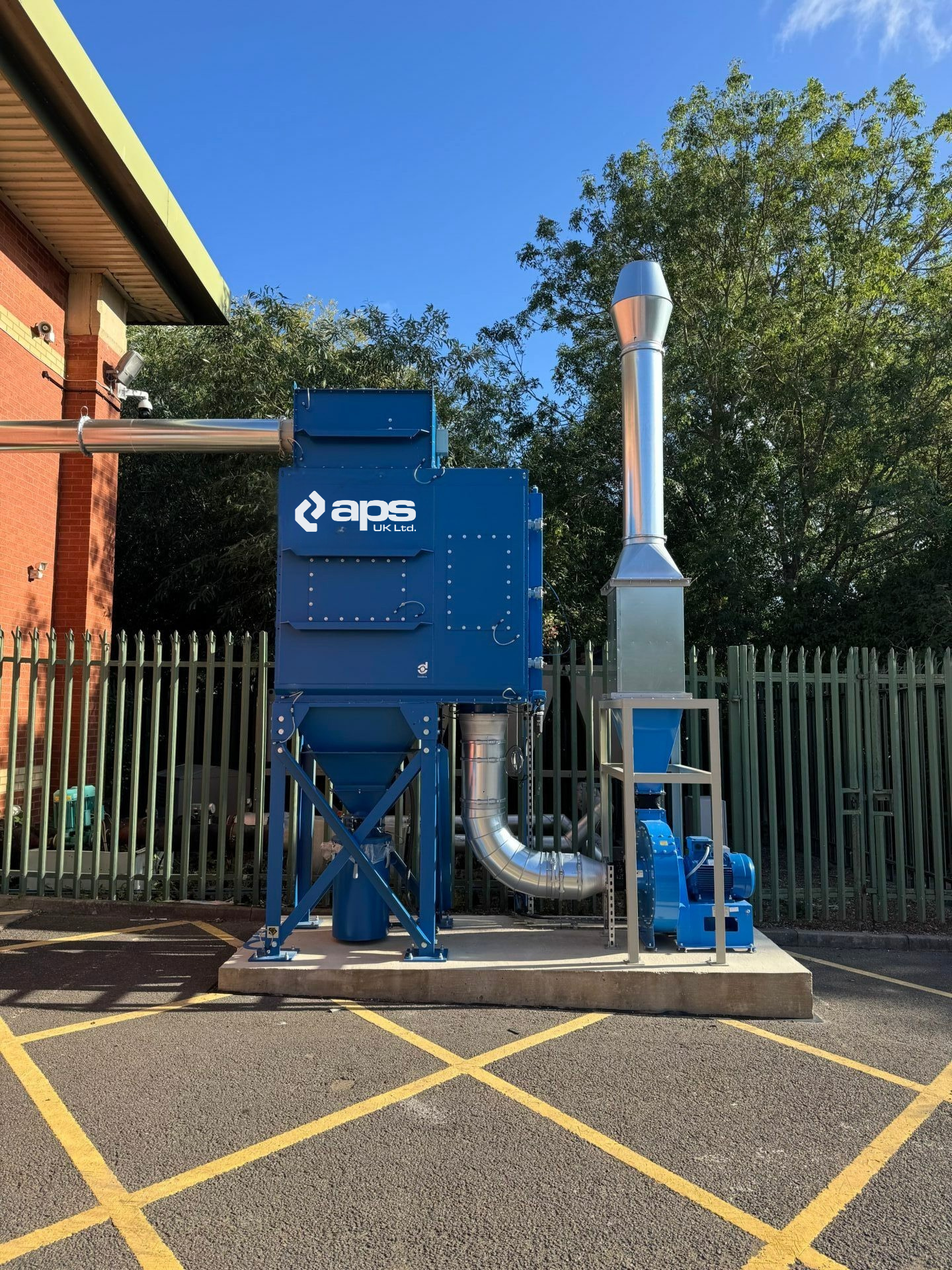
Aside from that, there have been a number of big installations undertaken – last year we did a large job for a company called Addisons, very stringent specifications, tight timelines and a fairly demanding customer, but as a team we achieved it!
If you could only eat one meal for the rest of your life, what would it be?
Haha, what sort of question is that! Thai Green Curry, or ‘Devilled’ cuttlefish from Sri Lanka. I’ve never had anything so nice in my life, although it was something of an effort to enjoy in the beginning!
What gets you up in the morning (other than an alarm clock)
Other than the mental Labrador we have, I guess it’s seeing what new challenges the day will bring, and seeing the progress on any one of the numerous projects that we have on the go.
Being busy is a strange thing, and almost a little addictive. Problem solving on the go, dealing with various jobs, spinning plates, it can be a balancing act but enjoyable, made more so by a good team.
Any other notable hobbies/facts about you?
I’m blessed with two wonderful lads, Ben and Max, who with my wife Diane, bring be a great deal of joy to my life.
I play the guitar, and have done since I was around 16 and was part of a group called ‘Kimber’s Heroes’. We were rubbish and knocked it on the head!
Ready to work with experienced dust and fume extraction specialists?
With decades of experience designing, installing and maintaining industrial dust and fume extraction systems across the UK, APS delivers solutions that protect people and productivity, whilst helping firms to reach sustainability and efficiency goals.
Get in touch today to speak to Mike and the team about your extraction or LEV system requirements.
We Consult
Understanding is key. We take the time to grasp your specific requirements, ensuring solutions tailored just for you.
We Design
With your needs as our blueprint, we craft designs that are both functional and in step with modern aesthetics.
We Install
Our team prioritises a smooth, efficient installation process, minimising disruption while focusing on optimal safety outcomes.