
A guide to dust and fume extraction in the pharmaceutical industry
Mike Cautley, Project Manager | Published March 12th 2026 | Updated May 12th 2026
Is staff safety at the forefront of your pharmaceutical operations? Health Service England (HSE) has recently been carrying out a series of dust exposure inspections at large bakeries, signalling that a wider enforcement crackdown could be on the way. Mike Cautley, our Project Manager, has been exploring the dangers dust can pose in pharmaceutical processing, and how you can mitigate them.
The dangers of dust in pharmaceutical processing
Across any industry, inhaling dust can carry huge health risks, ranging from respiratory issues, to long-term, potentially fatal illnesses like lung cancer. While the pharmaceutical industry is renowned for its strict hygiene and cleanliness, processes like grinding, blending, drying, tableting, and coating all generate fine, hazardous dust, which is harmful when airborne.
The handling of Active Pharmaceutical Ingredients (APIs), and particularly High-Potency APIs (HPAPIs), even in trace amounts, can pose significant risks to staff safety and product quality. During processing, these APIs create very fine, inhalable dust particles and high concentrations of solvents, which can settle deep in the lungs.
Finer dust particles generated during pharmaceutical manufacturing also carry greater combustion risk, as their smaller size creates a larger surface area relative to their weight, causing a faster reaction with oxygen.
Dust also poses a cross-contamination risk in the pharmaceutical sector. Active substances can travel through the air and settle on equipment or other products, potentially leading to costly recalls, large fines, and severe reputational damage.
If you’re not taking dust control seriously, you risk creating an unsafe working environment, breaching strict regulatory standards, and allowing airborne contaminants to compromise both product quality and operational reliability.
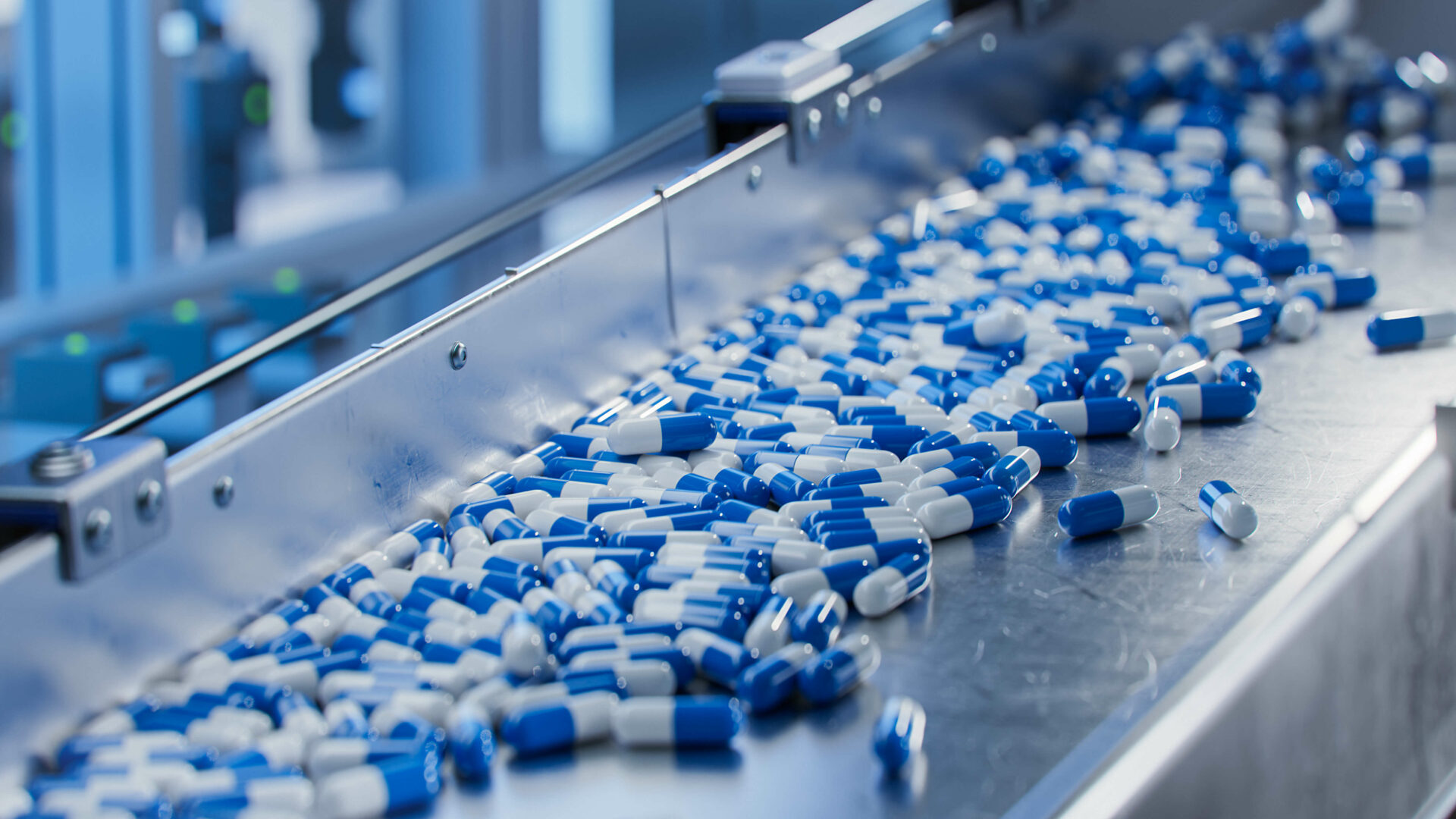
Managing dust in pharmaceutical manufacturing
There are three major considerations you should be thinking about when managing pharmaceutical dusts: exposure of your staff to dust; explosion properties of the dusts generated in your processes; and the risk of dust contaminating your products.
Pharmaceutical manufacturers in the UK must adhere to key regulations, like Control of Substances Hazardous to Health (COSHH) and Dangerous Substances and Explosive Atmospheres Regulations (DSEAR).
COSHH regulations require employers to manage risks arising from pharmaceutical dusts by conducting risk assessments, implementing Local Exhaust Ventilation (LEV) systems, monitoring workplace exposure limits (WELs) and using protective equipment when appropriate.
Meanwhile, DSEAR focuses on the explosive atmospheres that pharmaceutical dusts can create, requiring employers to assess, control, and mitigate the risks of combustion posed. This includes through the installation of LEVs, with a particular focus on ATEX-rated systems.
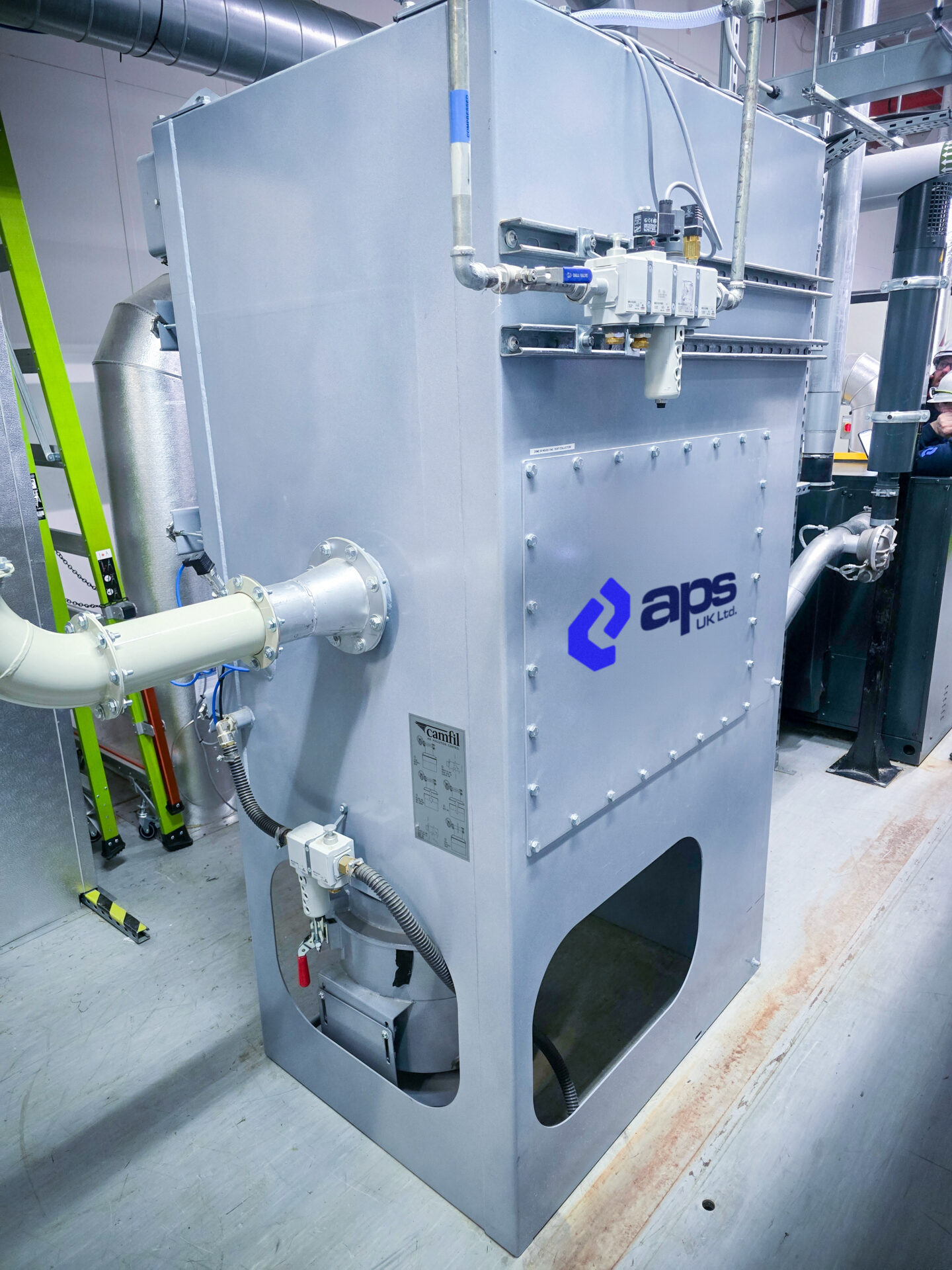
Selecting the best dust extraction system for a pharmaceutical environment
Different industries have different requirements for LEV systems. Dust extractors for pharmaceutical processing need to be designed to meet the strict hygiene requirements of the sector, including using stainless steel parts, HEPA filtration, at-source capture, and Bag-In/Bag-Out (BIBO) systems. To comply with DSEAR, systems should be ATEX-rated, meaning they can operate safely, and not act as an ignition source in areas where combustible dust is present.
At APS, our Front-End Engineering Design (FEED) service, is where we provide you with a detailed framework determining the feasibility of an LEV system project, alongside an accurate cost estimate before you make a full investment in a new system.
During this process, we’ll complete the initial scoping, planning, and design work of a dust extraction system, while outlining the technical requirements and assessing potential risks and costs. This bespoke approach is necessary as no two pharmaceutical manufacturers are the same – our engineers will consider what you produce, your factory layout, and the profiles of the dusts you generate to develop a system best suited to your needs.
Without using a process like FEED, you risk ending up with a dust extraction system that is inefficient, or worse, not fit for purpose at all.
Maintaining clean air in your pharmaceutical production environment doesn’t need to be a headache. Speak to our engineering team about how we can help develop an LEV system that keeps your team safe and your production on track.
Pharmaceutical dust extraction FAQs
A: Pharmaceutical manufacturing, involving processes like grinding and tableting, generates different types of fine dust, which often contain highly potent Active Pharmaceutical Ingredients (APIs).
A: Dust in pharmaceutical processing is dangerous due to the risk of exposure to Active Pharmaceutical Ingredients (APIs), which can settle deep in the lungs and cause severe respiratory issues amongst staff.
A: You should maintain the cleanliness of your factory, and also make sure a high-quality Local Exhaust Ventilation (LEV) system is installed to capture and remove dust at source.
A: UK pharmaceutical manufacturers are subject to Control of Substances Hazardous to Health (COSHH) and Dangerous Substances and Explosive Atmospheres (DSEAR). COSHH mandates that employers must take proactive steps to protect employees from hazardous substances in the workplace, while DSEAR covers the control of risks to safety from fire and explosions caused by dangerous substances.

We Consult
Understanding is key. We take the time to grasp your specific requirements, ensuring solutions tailored just for you.

We Design
With your needs as our blueprint, we craft designs that are both functional and in step with modern aesthetics.

We Install
Our team prioritises a smooth, efficient installation process, minimising disruption while focusing on optimal safety outcomes.